
This captivating realm of The First Electric Car 1890s has had a wonderful transformation over time, from steam carriages to contemporary advanced demo cars. In such a creative process, the creation of an electric car turns into a significant second step that indicates the development of more eco-friendly and rational transport means. While electric cars are usually linked to new developments in the majority of cases, their origin goes back to the beginning of automobile history.
The Beginning of Electric Drive: A Journey from Humble Beginnings to a Promising Future
Electrical drive had always been appealing to innovators and researchers for a long time because it was an eco-friendly and more effective means of transport. While the possibility to use electricity as the means to make cars work has existed since the 18th century, the invention of the first First Electric Car occurred at the end of the 19th century.
The First Electric Car: Pioneering the Path
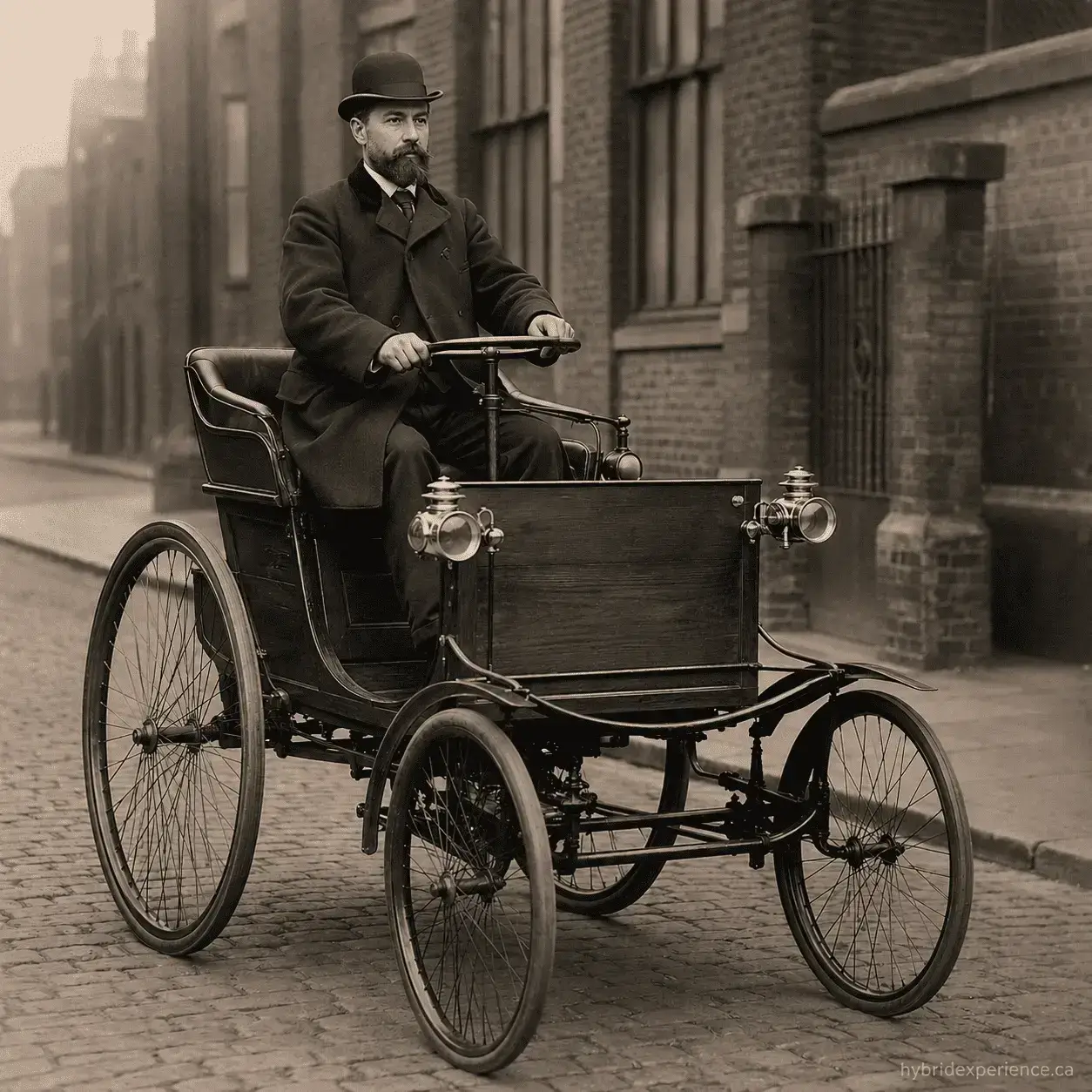
The Introduction of a Thought: Trouvé’s Vision for First Electric Mobility
Trouvé was fascinated by power from the very moment he was born. The young man studied extensively in order to gain knowledge about electrical design science and found the idea of researching the possibilities of that new invention very interesting. Thanks to his creative spirit, he explored several possible ways to use electricity for different inventions, including small electric motors.
At the end of the 1870s, the attention of Trouvé shifted to the issue of using electrical impulse in transportation vehicles. In those days, steam powered and gasoline driven cars had become quite popular, but they were noisy and very polluting. Trouvé came up with an idea of environmentally friendly transport – First Electric Car.
Bringing the Vision to Life: The Birth of the Electric Tricycle
Development Tradition: Trouvé’s Getting Through Effect
The pioneering actions carried out by Gustave Trouvé concerning the field of electric propulsion have left a permanent mark in the history of the transport industry. The use of electric tricycle for inspiring the development of this area has made the experts to consider the possible consequences of such transport usage.
In the modern world when the environmental issues caused by the fuel-operated transport become an urgent problem, the idea of eco-friendly electric transport becomes more topical than ever before. The unique invention of Trouvé represents the manifestation of his talent and strong faith in the capabilities of electricity.
William Morrison’s Contribution to Electric Mobility
When one reviews the history of electric cars, there is no denying that William Morrison deserves to occupy a place of honor among innovative inventors who have contributed immensely to the evolution of electric vehicles at its early stages. The Morrison Electric Carriage, which was developed in 1891, may justly be called the groundbreaking invention in the field of electric vehicles.
The Chemist’s Mission to Provide More Effective Transport
Being a chemist, Morrison retained an ardent interest in the field of energy resources and utilization. At the end of the 19th century, he began focusing on the developing field of electric cars because he realized the necessity for a more efficient means of transportation than steam engines and cars fueled by gases.
The Morrison Electric Carriage: An Indication of Progress
The revolutionizing invention by Morrison was made in 1891, where Morrison made his invention known by naming it “The Morrison First Electric Car.” The four-wheeled automobile was quite similar to the traditional horse-drawn carriage, and its drive system consisted of a 4 pull electric motor and 24 cell battery. The vehicle could seat six persons at a speed of 14 miles per hour.
The Morrison Electric Carriage gained popularity in 1893, in the Chicago World’s Columbian Piece. Its unique design, smooth functioning, and zero emission was one of the distinguishing aspects of the invention from the noisy and pollution generating steam cars.
Morrison’s Inheritance: Setting the Stage for Electric Cars
Though it is likely that Morrison’s electric carriage was not the first electric automobile to be manufactured, his invention made an essential contribution to promoting the invention and also showcasing the practicality of the invention. Morrison’s invention set the stage for development in the field of electric automobiles, helping to establish electric drive as one of the alternatives to gas-driven automobiles.
In the modern age when efforts are being made to develop eco-friendly transport, the legacy of Morrison still exists. It is due to his revolutionary discovery of the electric car that laid the groundwork for the modern electric car industry.
The Rise and Fall of Electric Cars in the Early 20th Century
A Story of Innovation, Competition, and Changing Fortunes
There was something quite fascinating about the overall history of transport that came up in the mid-twentieth century – that was the emergence of the First Electric Car and its later fall. For some time, the electric cars managed to stand their ground in the automobile industry and provided an environmentally friendly and quiet choice as opposed to gas automobiles. There were, however, various factors that contributed to their downfall making them a specialized vehicle in the future.
The Golden Era of Electric Cars: An Era of Dedication
The beginning of 1900 saw electric vehicles in a period of predominance especially among people living in the urban areas due to their ease of operation and absence of noise and exhaust fumes. The electric cars were popular among women due to their simplicity and tidiness.
In 1900, electric cars became an important part of the automobile industry in America. It was believed that electric cars would be the future of the transport industry and will take the place of petroleum powered cars.
Problems and Disadvantages: The Waning Popularity of Electric Cars
Even though electric vehicles had inherent success, there were some factors that eventually triggered their downfall. First, there was the question of the range. Electric vehicles used in the past only went for around 50 miles before recharging and thus were unable to travel far distances.
There was also not an established network of recharging stations for such electric vehicles. While electric cars could be charged at home, it was inconvenient and difficult. The more affordable gasoline-driven cars gained popularity as they became available.
The Arrival of Electric Starter: A Turning Point
The turning point in the history of the failure of electric vehicles occurred in 1912 with the invention of electric starter systems for gasoline powered cars. Before the invention, gasoline powered cars had to start by cranking by hand, a process that was tedious and at times dangerous.
The electric starter system made gasoline powered cars very easy to handle thus depriving the electric cars of one of their main strengths. The major discovery of oil fields in the middle of the 20th century further made gas affordable.
The Fall and Rise of Electric Vehicles
Electric cars were off the road by the 1930s and were replaced with cars which ran on gasoline because of the increased range, convenience and lower cost. Electric cars were confined to niche applications like golf cart and delivery van for many years.
It was only in the late twentieth century that electric cars came back into fashion because of worries about air pollution and the ecological damage caused by burning fossil fuels. New innovations in batteries and the improved efficiency of electric motors have made electric cars increasingly attractive propositions.
In present times, the future of electric cars seems to be very promising as electric cars have gained prominence because of the problems with climate change and requirement of green transport modes. Moreover, governments all over the world are encouraging the use of electric cars while manufacturers are developing electric cars.
The reappearance of Electric Cars in the 21st Century
Innovation and the Environment Lead to a Renaissance
Electric cars are now experiencing a comeback in the 21st century thanks to technological improvements, rising environmental concerns, and the emphasis on viable transportation systems. Again, after many years of being out of sight, electric cars are getting much attention as the consumers, manufacturers, and governments around the world are looking at them.
Solving Old Problems
There are various reasons that have brought about the revival of electric cars and have played an important role in the immense technological innovations involved in battery technology development. First generation electric cars were constrained by their poor range capabilities and very long recharge time. This made them not fit for use by certain people. Lithium ion batteries that are used in the current electric cars have tremendously increased the energy density and recharge time.
Technology in Motion
Electric vehicles have benefited from developments in battery technology as well as those in the technologies of electric motors, power management, and light materials.
Environmental Issues and Sustainability
New issues linked to environmental degradation and environmental effects of petroleum fuel sources have been another important aspect when considering the revitalization of electric vehicles. In search of environmentally-friendly means of transportation, which would minimize the emission of greenhouse gases in order to improve air quality, electric vehicles have come into limelight.
Government Incentives and Support
Governments across the world have realized that electric cars can be used to solve environmental problems and also reduce dependence on oil products. This is why some governments have introduced policies that will encourage the usage of electric automobiles via tax cuts and investing in electric car infrastructure.
Car Manufacturers Joining the Revolution
Automobile companies have responded to the increased need for electric vehicles by allocating significant amounts of funding towards researching and developing new kinds of electric cars. This is because the automobile industry is undergoing a time of great change, and electric cars will be part of the future of transportation.
The Road Ahead: A Splendid Future for Electric Vehicles
The development of electric cars in the 21st century is an important stage in the automobile world. With increasing technology and increasing environmental issues, electric cars are placed perfectly well to be the dominant force of transport in the coming two decades. Electric cars do not emit any emissions, they perform better and cost less.
End
In concluding our excursion into the splendid history of the very first electric car, it is obvious that the idea of electric propulsion has attracted the attention of designers and specialists for many years, providing an alternative form of transportation that is clean, quiet and efficient. The history of electric vehicles can be seen as one of evolution, flexibility and diversity, with various visionaries involved in developing this mode of transport.
From the first invention of Gustave Trouvé and William Morrison, through the period of rise and decline of electric vehicles in the mid-twentieth century, the history of electric vehicles can be seen as the product of technological progress, social change and environmental concerns. The return of electric cars in the twenty-first century is an example of dedication to sensible transport.
Looking into the future, the legacy of the pioneers of the First Electric Car can serve as an example of the possibility of overcoming any obstacles through the electric urge to change transportation. Thanks to ever-evolving technologies, rising environmental concerns, and continuous support from the side of governmental and private institutions, electric vehicles will have enough power to become a cornerstone of the future of transportation.
In general, the history of the electric vehicle serves as an example of human ingenuity, perseverance, and everlasting striving for something cleaner and more efficient. In the future, when facing challenges and new prospects, the electric car will serve as an excellent symbol that shows us the path to a greener future of transportation.